Satin Labels vs Woven Labels: Which One Should Your Brand Use?

Introduction

Pick up a shirt and run your thumb over the label at the neck. That small piece of fabric is the first thing your customer touches after buying — and it quietly tells them what kind of brand you are. Satin and woven labels both do the same job, but they feel different, wash differently, and suit different brands. This guide compares them honestly so you can choose with confidence, not guesswork.

Look and Feel

A woven label is made the way fabric is made: threads are woven together on a loom to form your logo and text. The result has a slightly raised, textured surface and a classic, structured look — the kind of label you find on premium denim, formal shirts, and export garments.

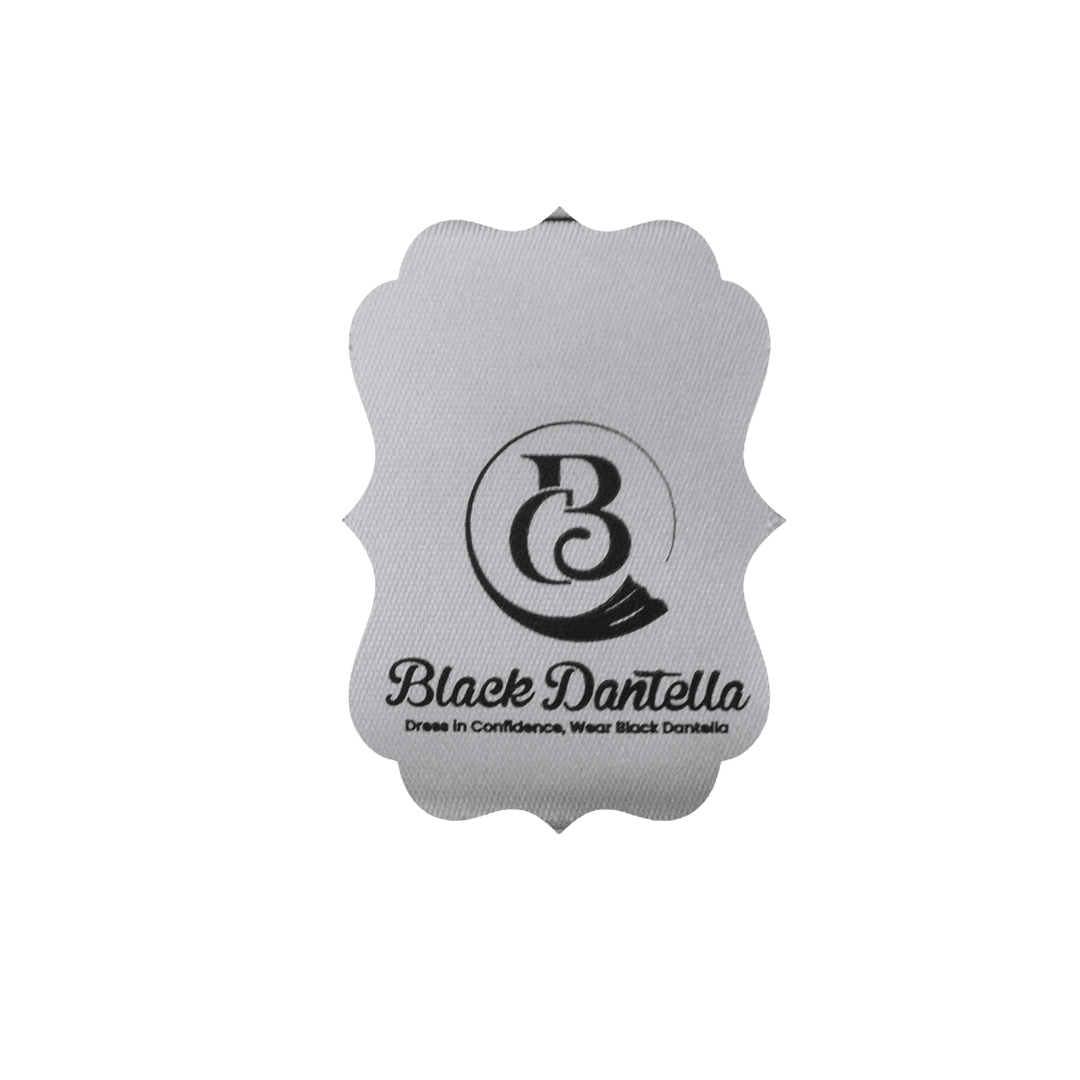
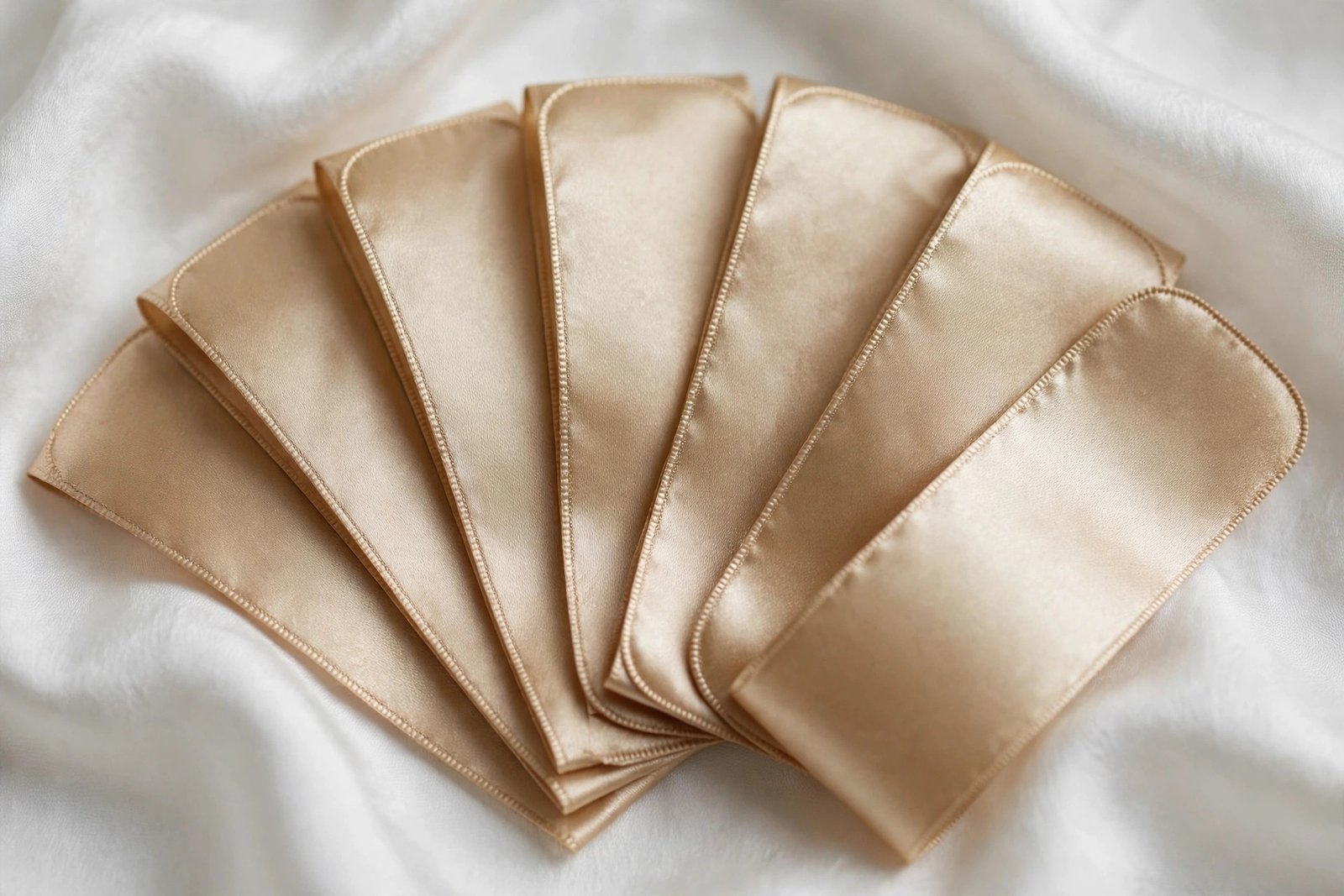
A satin label (typically printed on smooth satin ribbon, though satin-weave labels also exist) has a soft sheen and a flat, silky surface. It looks modern and clean, and it works well for brands that want a softer, more delicate finish — think babywear, ladies’ wear, and boutique clothing.

Neither look is “better” in general. A woven label says traditional and durable; a satin label says smooth and elegant. Match the label to the garment, not the other way round.

Durability After Washing

This is where the two labels part ways most clearly.

Woven labels are built to survive. Because the design is woven into the fabric rather than printed on top of it, the logo and text hold up through repeated washing, ironing, and everyday wear. For garments that will be washed often — school uniforms, workwear, daily-wear shirts — woven is the safer choice.

Satin labels are printed, so their durability depends on the print quality and the care the garment gets. A well-made satin label survives normal washing well, but over many hard wash cycles it will fade sooner than a woven label. If your garment is hand-washed or gently machine-washed, satin holds up fine. If it goes through rough, frequent washing, woven is the honest recommendation.

For the full breakdown, see our general woven vs printed label comparison.

Fine Detail and Small Text

Small text is the weak point of woven labels. Because the design is formed from threads, very fine lines and tiny lettering can blur or merge. If your logo has delicate details, thin lines, or micro-text smaller than about 1.5–2 mm in height, a standard woven label may not reproduce it as sharply as print.

Satin labels handle detail much better. Printing allows sharp edges, thin lines, small text, and even gradients or photographic elements that a loom simply cannot reproduce. If your design is detailed — a fine logo, a QR code, care symbols in small print — satin gives you the accuracy woven cannot.

A practical rule: if your artwork has fine detail, ask for a digital proof first. At Label Hub, production starts only after you approve the final artwork proof, and a technician checks your design for weave readiness before the loom runs — so a design that will not weave well gets caught before any fabric is cut.

Comfort Against Skin

A label that scratches the neck is a label the customer cuts out — and with it goes your brand name.

Woven labels are made from woven threads, so their edges can feel slightly firm. Most woven labels are comfortable, but for garments worn directly against the skin — babywear, innerwear, soft lawn — some customers notice the texture.

Satin labels are softer by nature. The smooth satin surface feels gentle against the skin, which is why babywear and ladies’ lawn brands often prefer them. If comfort is your top concern, satin has the edge.

That said, the fold matters too. A label folded and sewn so the cut edge is hidden feels better than the same label sewn flat with a raw edge — whichever material you choose, ask your manufacturer how the label will be finished.

Cost Per Label

There is no single answer to “which is cheaper,” because the price of a label depends on its size, the quantity ordered, the number of colours, and the finish. A small satin label in a large quantity can cost less than a large woven label in a small quantity — and the reverse is just as true.

What matters is the total picture: the minimum order, the production time, and the cost of getting it wrong. At Label Hub, woven labels start at a minimum order of 1,000 pieces, and production takes 2–3 working days after artwork approval. Delivery within Pakistan takes 2–7 working days, and international delivery takes 7–15 working days. For an exact price on your design, send your artwork through our online label design tool and you will get a quote for your exact size, quantity, and finish — no guessing.

Best Use Cases

Woven LabelsSatin Labels
Best forDenim, formal wear, export garments, uniforms, workwearBabywear, ladies’ lawn, boutique clothing, lingerie
FeelTextured, structured, premiumSmooth, soft, silky
Wash durabilityExcellent — design is woven inGood — depends on print and wash care
Fine detailLimited — small text can blurExcellent — sharp lines and small text
ComfortGood; edges can feel firmVery soft against skin
Brand impressionClassic, durable, traditionalModern, delicate, elegant

Which Label Should You Choose? Three Questions

1. How often will the garment be washed?

If the answer is “very often and roughly” — uniforms, workwear, children’s daily wear — choose woven. If washing is gentle, either works.

2. How detailed is your artwork?

Fine lines, small text, QR codes, or gradients point to satin. A bold, simple logo works beautifully in woven.

3. Where does the label sit on the body?

A neck label on babywear or soft lawn should be satin for comfort. A side-seam or hem label on denim or a jacket can be woven without any comfort concern.

If you answer “woven” to two of the three, order woven. If you answer “satin” to two, order satin. If you are still unsure, many brands order both — woven for the main brand label and satin for the care label. That combination is common and practical.

Frequently Asked Questions

Can I use both satin and woven labels on the same garment?

Yes. Many brands use a woven label for the brand name and a satin label for size and care instructions. The two materials work well together as long as the colours match, which is why it helps to order them together from one manufacturer.

Which label lasts longer after washing?

Woven labels last longer, because the design is woven into the fabric instead of printed on the surface. Satin labels last well with normal washing but fade sooner under hard, frequent washing.

Can a woven label show small text and fine detail?

Only to a limit. Very small text and fine lines can blur in a woven label. If your design needs sharp detail, a satin label is the better choice — or ask for a proof first to see how the design will actually look.

What is the minimum order for woven labels?

At Label Hub, the minimum order for woven labels is 1,000 pieces. Zipper bags, if you want matching packaging, start at 100 pieces.

How long does production take?

Production takes 2–3 working days after you approve your final artwork proof. Delivery within Pakistan takes 2–7 working days, and international delivery takes 7–15 working days.


There is no single winner between satin and woven labels — only the right label for your garment. Woven wins on durability and classic feel. Satin wins on detail and softness. Choose by how the garment is washed, how detailed your artwork is, and where the label sits on the body.

If you want to see both options for your own brand, explore our custom satin labels and custom woven clothing labels, or start your design online — your artwork is checked and approved by you before anything goes to production.


Label Hub is a woven label and clothing tag manufacturer in Faisalabad, Pakistan — Lasani Garden, Ismail Masjid Road, Faisalabad. Hours: Friday off, other days 9 AM–9 PM. Phone +92 306 1550505, email labelhubofficial@gmail.com.

You can also explore our full range of custom clothing labels in Pakistan for your brand.
Care Label Symbols Explained: Wash-Care Labels for Export Garments

A care label is the smallest label on a garment, and the one export buyers read most carefully. A wrong wash temperature or a symbol the buyer’s market does not recognise can hold up a shipment or cost a repeat order. The garment itself can be perfect — if the care information is wrong, the buyer treats the whole piece as non-compliant.

The symbols below come from the widely used ISO 3758 / GINETEX set; buyers may require the exact symbols for their destination market, so confirm the specification before printing.

The five symbol families

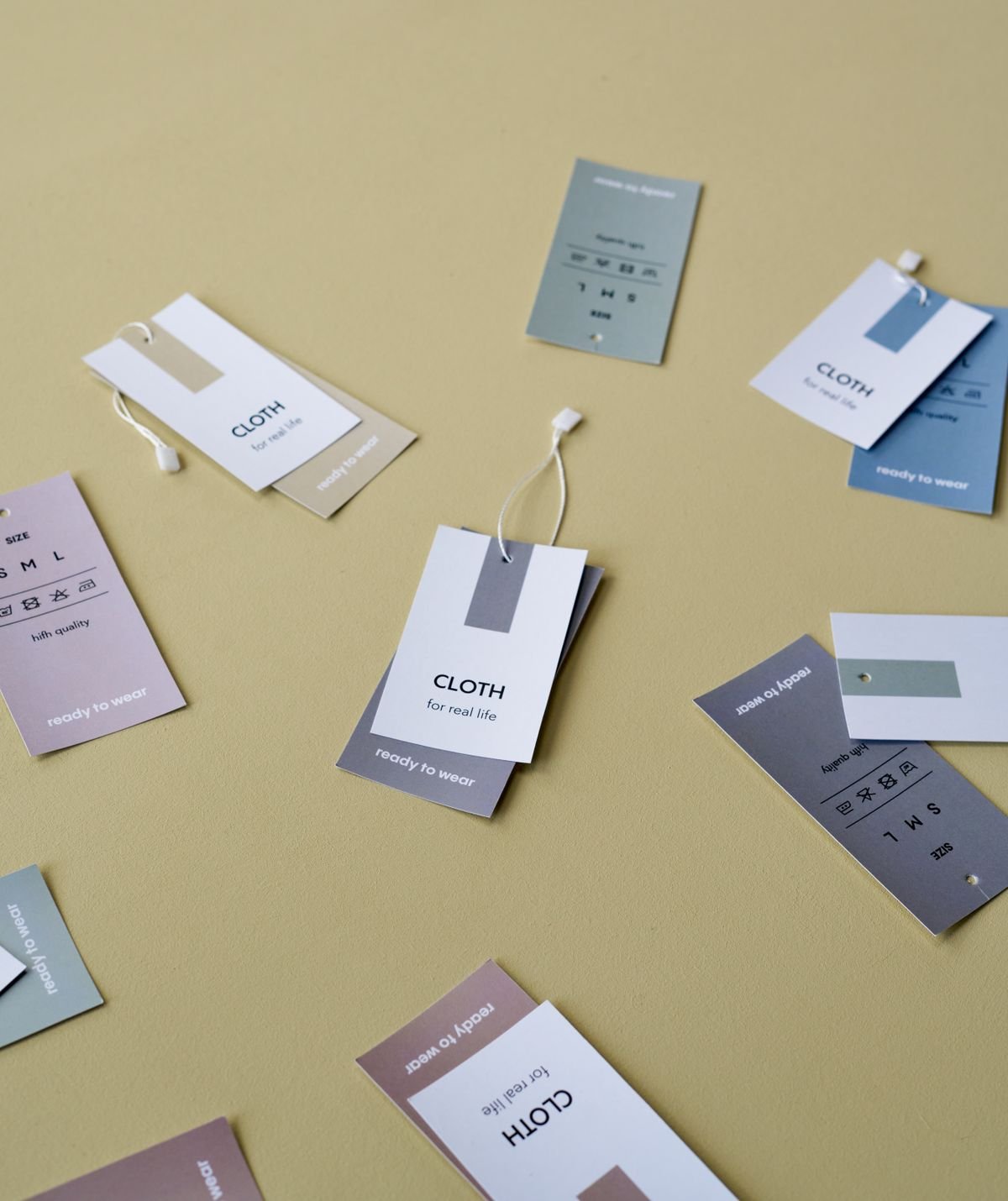
The shape tells you the process: tub washing, triangle bleaching, square drying, iron ironing, circle dry cleaning. A cross (X) means “do not do this”; dots and lines inside modify temperature or gentleness.

Common care symbols and what they mean

SymbolMeaning
Tub with a number inside (30, 40, 60)Machine wash, max temp °C
Tub with a hand above itHand wash only
Tub with one line underneathGentle / reduced cycle
Tub with two lines underneathVery gentle cycle
Tub with an X through itDo not wash
Empty triangleAny bleach allowed
Triangle with diagonal lines insideNon-chlorine bleach only
Triangle with an X through itDo not bleach
Square with a circle insideTumble dry allowed
Square with a circle and dots insideTumble dry; dots = heat (1 low, 2 med, 3 high)
Square with a line insideLine dry
Square with an X through itDo not tumble dry
Iron shapeIroning allowed
Iron with dotsIron temp; dots = heat (1 low, 2 med, 3 high)
Iron with an X through itDo not iron
CircleDry clean; letter (P, F) = solvent
Circle with a bar underneathGentle dry clean
Circle with an X through itDo not dry clean

Washing symbols: the tub

The tub is the symbol buyers check first: the number inside is the max water temperature in °C (30 delicates, 40 everyday cotton, 60 hard-wearing). A hand means hand wash only, lines underneath a gentler cycle, an X do not wash. Check the tub against the fabric before approving the artwork.

Bleaching symbols: the triangle

The triangle is the most misread symbol on a care label. Empty means any bleach is allowed; diagonal lines inside mean oxygen / non-chlorine bleach only, because chlorine would damage the fabric; an X means no bleach at all. Give this symbol a second look on every proof.

Drying symbols: the square

The square covers drying. A circle inside means tumble drying is allowed, dots setting the heat — one low, two medium, three high. A line inside means line dry. A garment dried on high heat instead of line-dried can shrink a full size — and the buyer will measure it.

Ironing symbols: the iron

The iron is the most self-explanatory symbol. Dots set the temperature — one cool, two medium, three hot — and an X means do not iron; an X through the steam means iron without steam. For printed or embroidered garments, the iron symbol protects the decoration.

Dry cleaning symbols: the circle

The circle is the professional-cleaning symbol. A letter inside tells the cleaner which solvent to use — P and F are common — and a bar underneath means a gentle cycle. An X means do not dry clean.

What export buyers actually check

A correct symbol is only half the job — buyers check four things:

Legibility. Symbols and wording must stay readable. Print that blurs, or ink that fades after the first wash, fails inspection — check the proof at actual size.

Durability after washing. A care label is washed with the garment, again and again, so print and fabric must survive the same wash the label describes. That is why custom woven labels are the standard for durable export trims — the information is woven in.

Correct symbols for the destination market. Different markets accept different symbol sets, and some buyers require words alongside the symbols. Confirm the specification in writing first — a symbol standard in one market can be wrong in another.

Placement. Buyers specify where the care label goes — usually a side seam or the neck. A care label in the wrong place fails inspection, even if every symbol is correct.

Getting your care labels right before production

The cheapest time to fix a care label is before the loom runs: get the buyer’s specification in writing, put the exact symbols on the artwork, check the proof at actual size. At Label Hub, production starts only after you approve the final artwork proof — a technician checks weave readiness first — so a mistake caught on the proof costs nothing. After approval, production takes 2–3 working days; delivery is 2–7 working days in Pakistan, 7–15 internationally. Woven labels start at 1,000 pieces.

For a full export trim set, care labels sit alongside woven brand labels and tags — See our custom size and care labels, read our guide on why care labels are important for clothing brands, or explore our full trim supply for clothing manufacturers in Pakistan.

Frequently asked questions

What do the five care label symbols mean?

The tub means washing, the triangle bleaching, the square drying, the iron ironing, and the circle dry cleaning. A cross means do not do that process; dots or lines inside adjust temperature or gentleness.

Who decides which symbols go on my garment’s care label?

The buyer does, through their care specification for the destination market. Label Hub prints the symbols from the artwork you approve — confirm requirements in writing first, and check the proof at actual size.

Can a wrong care symbol really get an export order rejected?

Yes. Buyers treat care information as compliance, not decoration. A wrong temperature or bleach instruction can mean a held shipment or a lost repeat order.

How long does it take to get custom woven care labels?

Production takes 2–3 working days after artwork approval, with delivery in 2–7 working days in Pakistan and 7–15 internationally. The minimum order for woven labels is 1,000 pieces.


Care symbols are a small detail with outsized consequences for export orders. Get the buyer’s specification in writing, check the proof at actual size, print once — view our size and care label options or start your design online.

You can also explore our full range of custom clothing labels in Pakistan to complete your export trim set.

Woven Label Quality Checklist: 7 Things to Check Before You Approve a Bulk Order

Introduction

A bad batch of woven labels costs far more than the labels themselves. A thousand cheap labels means a thousand garments you cannot ship, or a buyer rejecting the whole order over a spelling mistake. Most defects are visible before you approve a bulk order — if you know what to look for. Seven checks, about twenty minutes, on a sample batch.

1. The Artwork Proof — Spelling, Logo, and Text Size

Check every letter, line, and logo — on the final proof, at actual size. Read it aloud; have a second person read it too. Check the logo against your original file. For small text, print it at real size and read it at arm’s length.

What good looks like: zero errors, a matching logo, text readable without squinting. At Label Hub, production starts only after you approve the final proof; a technician checks weave readiness first. See our step-by-step label ordering process.

2. Weave Density — Hold It Up to the Light

Check the weave is tight and even, with no gaps or loose threads. Hold a label to the light: a good weave shows an even surface, no bright pinpricks. Run your thumb across the face — smooth and firm, not soft or spongy. Check the back too; loose threads mean the weave was not set tightly enough.

What good looks like: an even, dense surface on both sides, clean edges, no threads pulling loose on a gentle tug. A loose weave frays faster and looks tired in the wash.

3. Text Legibility at Real Size

Check every word is readable at the size it will actually be sewn in — not just on a large screen. Pin the sample in place and read it from a normal distance. Small script names and tiny care text are the usual casualties; very fine lines often do not survive being woven at 30 or 40 millimetres wide.

What good looks like: every word readable at a glance, letters holding their shape. If a detail is too fine to weave, a good manufacturer will tell you first. See our custom woven labels specifications.

4. Colour Match — Check in Daylight, Not Under Shop Lights

Check the woven colours match your brand colours in daylight. Compare the sample with your colour reference — a swatch, a previous batch, or your Pantone reference — in daylight or neutral white light. Shop lights and phone screens lie about colour. A navy that comes out purple will be visible on every garment.

What good looks like: colours matching your reference in daylight, consistent across the sample. Small variation between labels is normal; a clear shift in shade across the batch is not.

5. Fold and Cut Finish — Edges, Fold Lines, and Fraying

Check for clean cut edges, straight fold lines, and no fraying. Check the edges under good light; run a finger along them. For end-fold and centre-fold labels, fold one along its crease and check it sits straight and the ends line up. Pull gently at a cut edge — if threads come away, the cut was not sealed.

What good looks like: smooth, sealed edges, a fold that sits flat and straight, no loose threads after a gentle tug. Frayed edges only get worse in the wash.

6. Size Accuracy — Measure the Sample, Not the Quote

Check the finished labels measure what you ordered, with size consistent across the sample. Measure five to ten labels — length, width, fold position. Check for drift: if the first label is 50 mm and the tenth is 46 mm, the batch is inconsistent.

What good looks like: every label within a millimetre or two of the ordered size, the fold in the same place on each one. The size must match the placement — neck, side seam, or hem — not just the order form.

7. The Wash Test — Wash Five Labels Before You Approve a Thousand

Check the labels survive washing without fading, fraying, or shrinking. Stitch five samples onto scrap fabric; wash and dry them as your customer will. Compare with five unwashed labels: colours, edges, fold, legibility.

What good looks like: no fading, no new fraying, no shrinkage, text just as readable as before. This is the check most buyers skip — and most regret skipping.

Red Flags — Walk Away If You See These

  • No proof before production. A supplier who starts your order without a final proof is asking you to gamble on a thousand labels.
  • No sample, no address, no phone number. A manufacturer who will not show a sample or give real contact details cannot be held to account.
  • A price that makes no sense. A quote far below every other quote means something was cut — thread, weave, or proofing. You pay for it later, in rework.
  • Pressure to approve fast. “Approve today or the price changes” is a sales tactic. Real production takes 2–3 working days after artwork approval.

Frequently Asked Questions

How many labels should I check in a batch?

Five to ten, from different parts of the batch — not five from the top of the pile. Defects show up in some labels and not others.

What is the minimum order for woven labels in Pakistan?

At Label Hub, the minimum order for woven labels is 1,000 pieces. Zipper bags start at 100 pieces. Minimums vary, so confirm them before spending time on artwork.

How long does woven label production take?

At Label Hub, production takes 2–3 working days after you approve the artwork. Delivery inside Pakistan takes 2–7 working days; international takes 7–15. The clock starts at artwork approval.

Can I get a sample before placing a bulk order?

Ask your supplier before you order. A sample lets you run every check on this list on the real thing. If a supplier cannot provide one, treat that as a red flag.

What should I do if labels arrive with defects?

Check the batch against the proof you approved. If they do not match it, raise it with your supplier straight away, with photos of the defect and the proof side by side.


Seven checks, twenty minutes, five washed labels — all it takes to catch the defects that ruin a bulk order, before the bulk order exists. Run it on the proof and the sample; approve only when every item passes.

Ready to order? Start your design online — upload your artwork, approve the free proof; production starts only after your approval. See our full range of custom clothing labels in Pakistan.

How to Attach and Sew Labels on Garments: Methods, Placement and Mistakes to Avoid

A label is only as good as its attachment. A beautifully woven label that is sewn crooked, placed in the wrong spot, or stitched so tightly it puckers the fabric makes the whole garment look careless. Whether you are a home sewer, a small boutique, or a manufacturer running a production line, the way you attach a label matters as much as the label itself. This guide covers the methods, the placement, and the mistakes to avoid.

The Main Attachment Methods

Sew-In (Seam Attachment)

The most common method for woven labels. The label is placed into a seam — usually the neck seam or a side seam — and stitched in place as the garment is sewn. End-fold and center-fold labels are designed for this: their folded ends sit inside the seam, so no raw edge is visible.

Best for: Brand labels on necklines and side seams, in any quantity from one piece to thousands.

Tips: Sew the label in before the seam is closed, not after. Check that the label sits straight — a label sewn at an angle is immediately visible when the garment is worn.

Topstitching (Sew-On Flat)

The label is placed flat on the garment surface and stitched around its edges — on all four sides, or along the top and bottom. Straight-cut labels are designed for this method.

Best for: Chest labels, hem labels, sleeve labels, and decorative labels where the label is part of the design.

Tips: Use a thread colour that matches the label edge, not the garment, so the stitching blends in. Stitch close to the edge — about 1–2 mm — so the label lies flat and the corners do not lift.

Iron-On

Some labels come with a heat-activated adhesive backing. They are positioned on the garment and pressed with a hot iron for a few seconds. Iron-on is fast and needs no sewing machine.

Best for: Small batches, home sewing, name labels for children, and temporary labelling.

Tips: Iron-on alone is not as durable as stitching. For garments that will be washed often, sew the corners as well — an iron-on label that is also stitched will stay put for the life of the garment. Always test the heat setting on a scrap of the same fabric first.

Hand Sewing

For one-off garments, samples, or repairs, a label can be sewn on by hand with a needle and thread. Use small, even stitches around the edge of the label.

Best for: Samples, prototypes, alterations, and single custom pieces.

Tips: Hand sewing is slow, so it is not practical for production runs — but for a single garment, it gives the neatest control.

Where to Place a Label

Placement depends on the label’s purpose:

  • Brand label: Inside the back neckline is the standard position. For garments without a neckline seam, the left side seam near the hem is the usual alternative.
  • Size label: Next to the brand label, or on the back of the brand label itself (common with center-fold labels).
  • Care label: Inside a side seam, near the hem, where it is easy to find but not visible when worn.
  • Decorative label: On the outside — chest, sleeve, or hem — where it is meant to be seen. This is a design decision, so the placement should be consistent across the whole collection.

Consistency matters more than creativity here. If the label sits in a different place on every garment, the brand looks disorganised. Pick a position and use it for the whole production run.

Common Mistakes to Avoid

Sewing the label on crooked. The most visible mistake. Always check the label’s alignment before stitching — a quick pin or a single tacking stitch holds it in place while you sew.

Sewing through the design. Stitching across the middle of a woven logo damages the label and looks careless. Stitch only along the folded ends or the edges, never through the printed or woven design.

Using the wrong thread. A contrasting thread colour on a dark label draws the eye to the stitching instead of the brand. Match the thread to the label’s edge colour.

Placing the label where it irritates the skin. A stiff label sewn into a neckline will scratch the wearer. If the label will touch skin, use a soft fold — end fold or a well-finished center fold — and check it against the fabric.

Attaching the label after the garment is finished. Labels sewn into seams must go in during construction. Adding them afterwards means visible stitching on the outside of the garment and a weaker attachment.

Forgetting the care label. The brand label gets all the attention, but the care label is sewn in during the same stage. Order both together and attach both at the same time — see the ordering process on our How to Order page.

Labels on a Production Line

For manufacturers, label attachment is a production step, not an afterthought. Labels should arrive before stitching starts, be counted against the production quantity, and be attached at a fixed station with a fixed position. For manufacturers ordering in bulk, our woven labels are made for production-line use, with consistent sizing and folding across the whole batch.

Final Word

Attaching a label well takes a few seconds of care and saves hours of fixing. Choose the method that fits the label and the garment, place it consistently, and check the first few pieces before running the full batch. When you are ready to order labels for your garments, you can design them on the Start Your Design page.

Frequently Asked Questions

What is the best way to attach a woven label?

Sewing it into a seam is the most durable method. For flat positions like the chest or hem, topstitch it around the edges.

Can I iron on a woven label instead of sewing it?

Only if the label has a heat-activated backing. Even then, stitching the corners as well makes it last much longer through washing.

Where should the brand label go?

Inside the back neckline is standard. For garments without a neck seam, the left side seam near the hem is the usual alternative.

How do I stop a label from irritating the skin?

Use a soft fold (end fold or a well-finished center fold), place it where it does not rub constantly, and check it against the fabric before a full production run.

Why Care Labels Are Important (and What Happens Without Them)

Most customers never read a care label — until something goes wrong. A favourite kurta shrinks in the wash, a colour bleeds onto other clothes, a silk shirt loses its shape. Then the first thing they check is the small label inside the garment. For clothing brands, that little label does far more than list washing instructions. It protects the customer, the garment, and the brand itself. Here is why care labels matter, and what happens when they are missing or wrong.

What a Care Label Actually Does

A care label tells the wearer how to look after the garment: how to wash it, whether it can be tumble-dried, how hot the iron can be, and what the fabric is made of. That information seems basic, but different fabrics need very different treatment. Cotton can usually handle a warm wash; silk and wool cannot. A dark printed fabric may bleed colour in hot water; a delicate embroidered piece may need hand washing. Without the label, the customer is guessing — and a wrong guess ruins the garment.

What Happens Without a Care Label

The garment gets ruined. This is the most common outcome. A customer washes a “dry clean only” garment at home, or irons a heat-sensitive fabric on high, and the garment is damaged beyond repair. The customer does not blame the washing machine — they blame the brand.

Returns and complaints rise. A ruined garment often comes back to the seller as a complaint or a return. Even when the damage was caused by wrong washing, the brand pays the cost in refunds, replacements, and time spent handling complaints.

Trust is lost. A brand whose garments fall apart after one wash does not get a second order. Care labels are one of the cheapest ways to prevent that: a few lines of accurate information can add years to a garment’s life, and every extra wash the garment survives is another day the customer thinks well of your brand.

Export orders can be rejected. International buyers treat care labels as a basic quality requirement. Garments without proper size and care labelling can fail a buyer’s inspection, delay a shipment, or be rejected outright. For manufacturers supplying export orders, a missing care label is not a small oversight — it is a failed order.

What Should Be on a Care Label?

A good care label carries five things:

  1. Washing instructions — machine wash or hand wash, cold or warm water. This is the most important line on the label.
  2. Drying instructions — line dry, tumble dry, or dry in shade. Harsh sun and high heat are the two fastest ways to damage fabric.
  3. Ironing guidance — whether the fabric can be ironed, and at what temperature.
  4. Fabric composition — cotton, lawn, chiffon, silk, or a blend. Customers with allergies need this, and so does anyone who wants to care for the fabric properly.
  5. Size and origin — the garment size and, where relevant, a “Made in Pakistan” line.

The information should be short, clear, and honest. Washing symbols alone are not enough — many customers do not understand them. Words alongside the symbols make the label useful to everyone.

Printed or Woven Care Labels?

Care labels are usually printed rather than woven. Print handles small text and symbols well, and the information changes between products, so printing is more flexible. Taffeta is the common material — economical, durable, and easy to read. Brand labels, by contrast, are usually woven, because the brand name deserves the permanence and premium feel of weaving. Most established brands use both: a woven brand label for identity, and a printed care label for information. You can read more about woven options on our woven labels page.

The Cost of Getting It Wrong

A care label costs very little — a fraction of the garment’s price. A ruined garment costs the full price of the garment, plus the refund, plus the customer who never comes back. The maths is simple: accurate care labels are one of the cheapest forms of insurance a clothing brand can buy.

There is also a legal and compliance angle. Many markets require fibre content and care information by law, and buyers increasingly ask for it as part of their quality documentation. A brand that prints care labels properly is a brand that can sell anywhere.

How to Get Care Labels Right

  • Write instructions for the actual fabric, not a generic template. A lawn suit and a wool shawl need completely different care.
  • Keep the text readable. Text so small it needs a magnifier is the same as no text at all.
  • Check the symbols. If you use washing symbols, make sure they match the words next to them.
  • Order care labels with the brand labels, at the same time — they are sewn in during stitching, and ordering them late delays production.
  • Plan them into the order. See the full ordering process on our How to Order page, or read how manufacturers handle labelling for production runs on our manufacturer clothing labels page.

Final Word

A care label is a small piece of fabric with a large job: it keeps the garment wearable, the customer happy, and the brand trusted. Brands that take it seriously keep customers longer and sell into markets that demand it. Brands that skip it pay for the mistake one ruined garment at a time.

Frequently Asked Questions

Are care labels required by law?

Requirements vary by market, but most major markets require fibre content labelling, and international buyers almost always require care instructions as part of their quality standards. Even where it is not legally required, it is expected.

Should care labels be printed or woven?

Printed, in most cases. Print handles small text and symbols better, and care information changes between products. Taffeta is the usual material.

What happens if the care instructions are wrong?

The garment can be damaged by wrong washing, ironing or drying — and the customer will blame the brand. Wrong instructions are worse than no instructions, because the customer follows them in good faith.

When should I order care labels?

At the same time as your brand labels, before stitching begins. Care labels are sewn into garments during production, not added afterwards.

Woven Label Sizes and Folds Guide: End Fold, Center Fold, Miter Fold (and More)

The fold of a woven label decides how it is sewn into the garment, how it looks on the finished product, and what its final size will be. Order the wrong fold and a perfect design can end up hidden in a seam or sticking up awkwardly. In this guide, you will learn the main woven label fold types — end fold, center fold, miter fold, straight cut, and Manhattan fold — the typical size ranges for different placements, and how to match the right fold and size to your garment.

Why the Fold Type Matters

A woven label is cut larger than its finished size, then folded before sewing. The fold hides the raw cut edges so they do not fray, and it determines which edges get stitched. The same design can look completely different depending on the fold — one sits flat like a badge, another forms a loop in a seam. Choosing the fold first also tells you the finished dimensions to design around, which keeps artwork from being folded out of sight. For the artwork side of the process — fonts, thread colors, and file preparation — read how to design a custom woven clothing label.

The Main Woven Label Fold Types

End Fold (Folded on the Left and Right)

The left and right edges are folded under, and the label is sewn flat onto the garment — either along all four edges or just at the folded ends. End-fold labels sit on the surface like a small badge, so the full design stays visible. Best for: hem labels on jeans and jackets, sleeve labels, and any label sewn onto the outside of the garment.

Why brands choose it: The end fold gives the cleanest presentation. Nothing covers the design, and the folded ends tuck neatly out of sight. It is the most common fold for woven brand labels.

Watch out for: Because both ends are stitched, the label must be sized correctly for the space it goes into — too long and it will bunch, too short and it will look cramped.

Center Fold

The label is folded in half down the middle, forming a loop. The open ends are sewn into a seam — typically the neckline or a side seam — so the folded edge faces outward. This is the classic t-shirt neck label. Best for: neck labels, waistband labels, and anywhere a loop-style label tucked into a seam looks clean.

Why brands choose it: The loop shape is easy to sew into a seam during production, and it works well for labels that carry two pieces of information — brand on the front, size or care on the back.

Watch out for: The folded edge is the part that touches the skin, so a center fold label should be soft and well-finished. A stiff or rough fold will irritate the wearer and make the garment feel cheap, whatever the label says.

Miter Fold

Similar to a center fold, but the ends are folded at an angle to form points, creating a distinctive banner shape when sewn into a seam. The angled ends give a tailored, high-end look. Best for: premium neck labels, collars, and garments where the label itself is a design feature.

Straight Cut (Sew-Flat)

The label is cut to size with no fold at all and sewn flat on all four sides. It is simple and economical, but the cut edges are exposed, so it suits labels where the edge disappears under stitching or where a raw-edge look is acceptable. Best for: side-seam labels, quilt and craft labels, and budget-friendly applications.

Why brands choose it: A straight cut label shows the whole design, lies completely flat, and can be placed anywhere on the garment, not just in a seam.

Watch out for: The edges must be properly sealed or they will fray with washing. A straight cut label sewn only at the top and bottom can curl at the corners over time.

Manhattan Fold

The top and bottom edges are both folded under, giving a clean, finished look on all sides. The label is sewn flat onto the garment. Best for: high-end neck and hem labels where a refined finish matters.

Why brands choose it: It combines the easy seam attachment of a center fold with a flatter, more tailored appearance. It is a popular choice for high-end and designer labels.

Watch out for: The Manhattan fold costs slightly more than a standard fold because the folding is more complex. For large basic orders, a center fold may do the same job for less.

custom woven labels and hang tags ready for stitching

Typical Woven Label Sizes

Size always refers to the finished (folded) dimensions unless stated otherwise. As a general guide: neck labels commonly run about 50 mm wide and 12–20 mm tall; side-seam and care labels are often narrower, around 30–40 mm wide; small hem or sleeve labels may be as compact as 25–30 mm wide. These are starting points, not rules — the right size depends on how much text the label carries and the scale of the garment. Children’s clothing usually takes smaller labels than adult outerwear.

Matching the Fold and Size to Your Garment

  • T-shirts and polos: center-fold neck label, around 50 mm wide — soft, standard, and comfortable.
  • Jeans and denim jackets: small end-fold hem label, sturdy enough to match the fabric.
  • Hoodies and sweatshirts: center fold or miter fold at the neck, depending on how premium you want it to feel.
  • Baby and children’s wear: small labels with soft folds — comfort comes first, so soft printed care labels are often the better choice (see woven label vs printed label for the full comparison).
  • Caps and beanies: these often use embroidered patches rather than woven labels.
custom shaped woven clothing labels

How to Choose the Right Fold

Ask yourself three questions:

  1. Where does the label go? Neckline and side seams suit end fold or center fold. Flat outer positions suit straight cut.
  2. What must the label show? A brand name alone suits any fold. Brand plus size or care information suits a center fold, where both faces can be used.
  3. What is the garment’s price level? Premium garments deserve the neater finish of an end fold or Manhattan fold. Everyday garments are well served by a center fold or straight cut.

If you are still unsure, describe the garment and where the label will sit when you start your design — a label specialist can recommend the fold that fits.

Common Mistakes to Avoid

  • Choosing a fold without checking it against the actual garment and seam.
  • Ordering a center fold label for a position where it will rub against the skin.
  • Forgetting that the fold affects the label’s finished size — the folded size, not the flat size, is what the customer sees.
  • Changing the fold after artwork approval, which means starting production over.

Frequently Asked Questions

What is the most common fold for neck labels?

The center fold is the most common for neck labels — it forms a loop sewn into the neckline seam and suits t-shirts, polos, and most casual wear.

What size should a woven neck label be?

A common finished size is around 50 mm wide and 12–20 mm tall, but the right size depends on your design and garment. Always confirm the finished (folded) size with your manufacturer.

What is the difference between a center fold and an end fold?

A center fold is folded in the middle to form a loop sewn into a seam; an end fold has its left and right edges folded under and is sewn flat onto the garment’s surface like a badge.

Which fold is best for care labels?

Straight-cut or center-fold labels are the most common for care labels — simple, economical, and usually sewn into the side seam where they stay out of the way.

Does the fold type affect the cost of woven labels?

In general, slightly. More complex folds need extra fabric and handling, so they can cost a little more than a simple straight cut — though the difference is usually small compared to the overall order.

Order Labels in the Right Size and Fold

Tell Label Hub in Faisalabad, Pakistan your garment type, placement, and design, and we will recommend the right fold and finished size — then manufacture your woven labels exactly to spec. Share your requirements through our start your design page or contact us. You can also explore our full range of custom clothing labels in Pakistan.

Prefer email or a form? Contact us and we will get back to you.

Ready to order? Browse our woven labels or start your design.

How to Design a Custom Woven Clothing Label

A well-designed woven label makes your brand look established from the very first piece. A poorly designed one — blurry text, clashing colors, the wrong size — does the opposite. In this guide, you will learn the practical steps to design a custom woven clothing label: choosing the right size, keeping text legible, picking fonts and thread colors, selecting a fold, and preparing artwork your manufacturer can actually weave — plus the most common mistakes to avoid. Still deciding between woven and printed? Start with our woven label vs printed label comparison.

Step 1: Decide on the Right Label Size

Start by measuring where the label will go. Neck labels for t-shirts are commonly around 50 mm wide and 12–15 mm tall after folding, while care labels are usually smaller and narrower. Always design to the finished (folded) size, and remember that extra fabric is needed on each side for the fold allowance — the artwork area is smaller than the total fabric.

If in doubt, cut a paper mockup to size and pin it on a sample garment. A label that looks perfect on screen often feels too big or too small on the actual product.

garment factory worker operating an industrial sewing machine

Step 2: Keep Text and Logo Legible

A loom weaves with threads, not pixels, so woven labels have physical resolution limits. Keep brand names and text large enough to read at arm’s length, and simplify detailed logos — fine lines, tiny text, and intricate emblems tend to blur or fill in during weaving. As a general rule, if you have to squint at your design on screen at actual size, it is too detailed to weave cleanly.

Step 3: Choose a Readable Font

Bold, simple fonts weave best. Clean sans-serif typefaces hold their shape at small sizes, while thin serifs, script fonts, and condensed styles can break up or become unreadable. Avoid letter spacing that is too tight, and set all-caps text slightly larger than mixed-case text, since capitals need more room to stay clear. When in doubt, ask your manufacturer to review the font choice before production.

Step 4: Pick Thread Colors That Work Together

Most woven labels use a limited number of thread colors — and restraint looks better. Choose strong contrast between the background and the text (dark text on a light ground, or light text on a dark ground) so the brand name reads instantly. Provide color references from a standard system such as Pantone, or match shades from the manufacturer’s thread chart. Avoid gradients and photographic blends: weaving builds images from solid threads, so every color in your design becomes a separate thread.

colorful embroidered clothing label close-up

Step 5: Select a Fold Type

The fold determines how the label is sewn into the garment and what the finished label looks like. The most common options are the center fold (folded in the middle and sewn into a seam — the classic neck label), the end fold (folded on the left and right, sewn flat like a badge), and the miter fold (folded into a loop with angled ends for a tailored look). State your preferred fold when you order, because it affects the finished size and the sewing method. For a full breakdown of every fold type with size guidance, see our woven label sizes and folds guide.

Step 6: Prepare Production-Ready Artwork

Send vector artwork whenever possible — AI, EPS, or PDF files with text converted to outlines scale perfectly and leave nothing to guesswork. If you only have a raster image (PNG or JPG), make sure it is high resolution and at least the actual label size. Include a note covering thread colors, the finished size, the fold type, and where the label will be sewn. Clean, complete artwork means fewer revisions and a faster turnaround.

Questions about your artwork? Contact Label Hub for guidance before you order.

Common Mistakes to Avoid

  • Too much text. A label is not a business card — the brand name and logo are usually enough.
  • Tiny or thin fonts that disappear in the weave.
  • Low-resolution artwork that forces the manufacturer to guess at details.
  • Gradients and photo effects that cannot be woven with solid threads.
  • Forgetting the fold allowance, so text runs into the folded edge.
  • Weak color contrast between the background and the lettering.
  • Skipping a proof or sample before approving full production.

Frequently Asked Questions

What file format should I send for my woven label design?

Vector formats such as AI, EPS, or PDF (with fonts converted to outlines) are best. High-resolution PNG or JPG files also work if they are at least the actual size of the label.

How small can the text be on a woven label?

Keep text comfortably readable — as a general guideline, letters should be a few millimeters tall at minimum. Anything smaller risks blurring during weaving.

Can I use my full-color logo on a woven label?

You can, but each color becomes a separate thread, so simplifying a full-color logo to a few solid colors usually gives a cleaner, sharper woven result.

Do I need to add extra size for the fold?

Yes. Always specify the finished (folded) size and let the manufacturer add the fold allowance — or ask how much extra fabric your chosen fold type needs.

How many colors can a woven label have?

There is no hard limit, but fewer colors weave more cleanly and are generally more economical to produce. Most brand labels use a small handful of thread colors.

Ready to Create Your Label?

Send your design to Label Hub in Faisalabad, Pakistan, and we will turn it into a clean, professional woven label — reviewing your size, fonts, colors, and fold before anything goes to the loom. Share your logo and requirements through our start your design page or contact us to get started.

Ready to order? Browse our woven labels or start your design.

Woven Label vs Printed Label: Which Is Better for Clothing Brands

Woven or printed? The label is often the first thing a customer touches, and it quietly shapes how they judge your quality. In this guide, you will learn what each type is, how they compare on durability, look and feel, and cost, and which fits different garments — so you can brief your manufacturer with confidence.

What Is a Woven Label?

A woven label is made on a loom: colored threads are woven together to form your text and logo directly in the fabric. The design is part of the material, not sitting on top of it. Most woven labels use polyester threads, with a damask weave giving the finest detail. The result has a slightly raised, textured surface that feels premium. Because the threads are dyed before weaving, colors run through the whole label and hold up well. Woven labels are the classic choice for brand neck labels.

close-up of a custom woven clothing label

What Is a Printed Label?

A printed label starts with plain fabric tape — usually satin, cotton, or polyester — and your design is printed onto its surface by screen printing or a similar process. The ink sits on top, so the finish stays flat and smooth.

Printed labels reproduce very fine detail, small text, and multi-color artwork that would be difficult to weave. With nothing raised to irritate the skin, they are the standard choice for care, size, and content labels carrying washing instructions and fabric composition.

printed satin care label with washing instructions

Woven Label vs Printed Label: Key Differences

Durability

Woven labels are built for the long run: the design is woven from dyed threads, so there is nothing to crack, peel, or wash off. Printed labels are durable too, but the print sits on the surface, so heavy abrasion and many washes can gradually fade the ink. For garments washed often over years, weaving has the edge.

Look and Feel

Woven labels look and feel premium — the texture catches the light and the label has real substance. Printed labels look clean and modern with a smooth, flat finish. Luxury, heritage, or streetwear brands usually suit woven; minimal, soft, or technical brands often suit printed.

Cost Implications

As a general rule, woven labels cost more per unit than printed labels: weaving needs loom setup and colored threads for every element of the design. Printed labels are simpler to produce, so they are generally the more economical option — especially for care and size labels where information, not branding, is the point. The gap narrows at higher volumes.

Fine Detail and Small Text

Printing wins on raw detail: tiny text, thin lines, and complex multi-color artwork reproduce cleanly on a printed label. Weaving has physical limits — threads have thickness, so very small text or hairline details can blur or fill in. If your design has very small text or photographic detail, printing (or a simplified woven redesign) is the safer route. Going the woven route? Read our guide on how to design a custom woven clothing label to keep every letter legible at weaving resolution.

Comfort Against the Skin

Printed labels are softer: with no raised threads, they sit flat and rarely itch — an advantage for baby clothes, underwear, and sensitive skin. Woven labels are not rough, but the texture can bother sensitive wearers, which is why many brands pair a woven brand label with a soft printed care label.

When to Choose a Woven Label

Choose woven when the label is part of your branding: neck labels, hem labels on jeans and jackets, and any label customers see and touch as a sign of quality. Woven suits denim, outerwear, workwear, uniforms, and premium casual wear — garments with a long life. Once you have chosen woven, our woven label sizes and folds guide will help you pick the right fold and finished size for your garment.

When to Choose a Printed Label

Choose printed for care, size, and content labels, where information matters more than texture. Printed is also the smart pick for baby and children’s clothing, underwear, and activewear — anywhere softness is a priority — and for designs needing very small text or fine detail.

Can You Use Both on the Same Garment?

Absolutely — and most professional brands do. The classic combination is a woven brand label at the neckline for identity and prestige, plus a printed care and size label at the side seam for information and comfort. Each label does what it does best instead of one label doing everything.

For Garment Exporters: Compliance, Wash-Care Durability & Inspection Standards

When a garment is made for export, the label is inspected as carefully as the stitching — and the woven-versus-printed decision matters more than it does for local orders. International buyers check labels during quality control, and their standards are higher than a local retail customer’s. Here is what export buyers actually check, and how to plan around it.

What Export Buyers Actually Check

An export buyer — or their quality inspector — looks at labels for four things:

  1. Consistency. The same label, same colours, same quality, on every piece in the order. A label that varies between pieces raises questions about the whole shipment.
  2. Durability. The label must survive the washing the buyer will test, plus shipping, storage, and the garment’s working life.
  3. Legibility. Brand name, size, fabric composition, and care instructions must be readable — not blurred, faded, or peeling.
  4. Compliance. Fibre content and care information must be present and accurate, as required by the destination market.

A label that fails any of these can delay a shipment or, in a strict inspection, cause a rejection. That is why the woven-versus-printed decision matters more for export than for local orders.

Compliance and Documentation

Care labels are not just helpful — they are required by many destination markets, which ask for fibre content and care instructions on the garment. Buyers also increasingly include label specifications in their quality documentation.

  • Print the facts, not the marketing. Fibre composition percentages and care instructions must be accurate. A wrong percentage or a wrong washing instruction is a compliance failure, not a design choice.
  • Keep a record. Keep the approved artwork and the label specification on file for every buyer. When a buyer reorders, the same specification must be reproduced exactly — same weave, same size, same colours. Reordering the identical design is how manufacturers keep their buyers’ branding stable across seasons. You can read how we handle manufacturer orders on our manufacturer clothing labels page.

Timelines and Planning for Export

Export orders run on fixed shipment dates, so label timing must be planned backwards from the ship date:

  • Production: 2–3 working days after artwork approval.
  • Delivery in Pakistan: 2–7 working days.
  • International delivery: 7–15 working days.

Order labels when the fabric is booked, not after stitching begins — labels go into garments during production, and a late label delivery can delay an entire shipment. See the full process on our How to Order page.

Frequently Asked Questions

Which lasts longer, a woven label or a printed label?

A woven label — the design is woven from dyed threads, so there is no ink layer to fade, crack, or peel over many washes.

Is a printed label cheaper than a woven label?

In general, yes. Printed labels are simpler to produce and usually cost less per unit than woven labels. The gap narrows at larger volumes.

Do woven labels fade in the wash?

They hold color very well because the threads are dyed before weaving, and they do not fade the way surface printing can.

Which label type is best for a new clothing brand?

Most use both: a woven label for the brand name at the neck, and printed labels for care, size, and content information.

Can a printed label show the same detail as a woven label?

Printed labels can show finer detail than woven labels — very small text and thin lines reproduce cleanly in print, while weaving has physical limits on how fine the detail can go.

Get Labels Made for Your Brand

Whether you need premium woven brand labels, soft printed care labels, or both, Label Hub in Faisalabad, Pakistan manufactures custom labels to your exact design. Share your logo and requirements, and we will help you choose the right label type, size, and finish. Share your requirements through our start your design page or contact us. You can also explore our full range of custom clothing labels in Pakistan.

Ready to order? Browse our woven labels or start your design.

Custom Woven Labels in Rawalpindi for Boutiques, Uniforms and Startups

The twin cities move fast. In Rawalpindi and Islamabad, new boutiques open every season, schools and corporate offices order uniforms in bulk, and fashion startups launch with fresh branding and big ambitions. What they all need is the same small detail: a professional label. For a school uniform, it is a durable name label that survives years of washing. For a new clothing brand, it is the woven mark that tells customers this is the real thing.

Label Hub manufactures custom woven labels in Faisalabad and supplies them to boutiques, uniform suppliers, schools, corporate buyers, and fashion startups across Rawalpindi and Islamabad. Whether you need sturdy uniform labels or an elegant brand label for your first collection, you order directly from a Pakistani manufacturer — with free design support included.

Custom hang tags for Rawalpindi boutiques and fashion startups

Labels for Uniforms, Boutiques and New Brands

  • Custom woven labels — Your brand or institution name woven in high-density thread. Damask weave gives sharp detail for logos; taffeta offers a clean, economical finish. Available in end fold, center fold, miter fold, and straight cut.
  • Durable uniform labels — Woven and printed labels made to withstand repeated washing — ideal for school uniforms, corporate uniforms, and workwear that gets worn and washed constantly.
  • Satin labels — Soft, premium-feel labels for boutiques and fashion startups that want their first collection to feel established and refined.
  • Printed size and care labels — Clear size markings and washing instructions for uniforms and retail garments alike.
  • Hang tags — Branded swing tags that give new brands a professional retail presence from day one.
  • Stickers and packaging — Custom stickers, zipper bags, and paper bags so even a startup’s first dispatch looks like an established brand.

Starting a new brand? Many of our Rawalpindi clients order a complete starter set — woven brand labels, size labels, hang tags, and packaging — from one manufacturer, so everything matches from the first piece.

Why Rawalpindi Businesses Choose Label Hub

  • Made in Pakistan, direct from the manufacturer. We produce in Faisalabad and supply across the country. No middlemen, no import delays — you deal directly with the people making your labels. We supply woven labels across Pakistan to clothing brands in every major city.
  • Free design support. Launching a brand and unsure about label design? Send us your logo or even a rough idea, and we prepare a professional design proof for your approval — refined until you are happy, at no extra cost.
  • Built for uniforms. We understand what uniform labels go through — daily wear, frequent washing — and make them to stay legible and intact.
  • Minimum order: 1,000 woven labels; zipper bags from 100 pieces.
  • Delivery to Rawalpindi and Islamabad. Finished labels are packed securely and shipped to your address in the twin cities or anywhere in Pakistan — including exporters in Sialkot.

How to Order

Send your logo or artwork via Start Your Design — upload your design, design online, or reorder — along with your label size and quantity. We prepare a free design proof, you approve it, and your labels go into production.

Frequently Asked Questions

We need labels for school uniforms. Will they last?

Yes. Our woven uniform labels are made to stay legible and intact through repeated washing, and every batch is quality-checked before it ships.

I’m launching a fashion startup in Islamabad with a small budget. Can I order a small quantity?

Yes. Minimum order: 1,000 woven labels; zipper bags from 100 pieces. Start your design online — upload your design, design online, or reorder — with your label size and quantity, and we will prepare a design proof for your approval before production.

I only have a rough logo idea, not finished artwork. Can you still help?

Yes. Send us whatever you have and our team will prepare a professional label design proof for your approval before production.

Do you deliver to Rawalpindi and Islamabad?

Yes. We ship across Pakistan, including Rawalpindi and Islamabad, with secure packing so your labels arrive ready to use.

Order Custom Woven Labels in Rawalpindi

Launch your brand — or uniform program — with professional labels. Get custom woven labels manufactured in Pakistan, with free design support and a free, no-obligation quote.

WhatsApp: +92 306 1550505 / Email: labelhubofficial@gmail.com / Address: Lasani Garden, Ismail Masjid Road, Faisalabad, Punjab 38000, Pakistan

Custom Woven Labels in Gujranwala for Knitwear and Garment Factories

Gujranwala’s factories keep Pakistan warm. The city’s knitwear units produce sweaters, hoodies, fleece jackets, and winter wear that sells across the country — thick, textured fabrics built for comfort. Labels for knitwear have their own requirements: they must sit flat against stretchy fabric, feel soft against the skin, and survive repeated washing without curling or fading. A stiff, scratchy label can ruin an otherwise perfect sweater.

Label Hub manufactures custom woven labels in Faisalabad and supplies them to knitwear factories, garment manufacturers, and clothing brands across Gujranwala. We make labels designed for knitted garments — soft weaves, smooth edges, and secure folds that stay in place wash after wash.

Woven label production for Gujranwala knitwear factories

Labels Built for Knitwear

  • Custom woven labels — Soft, flexible weaving that sits comfortably on knitted fabric. Damask weave captures detailed logos, while satin gives the smoothest hand-feel for neck labels. Choose end fold, center fold, miter fold, or straight cut.
  • Satin labels — The softest option for necklines — ideal for sweaters, hoodies, and fleece where the label touches the skin directly.
  • Printed size and care labels — Lightweight printed labels with size and washing instructions, perfect for knitwear where a bulky label would feel out of place.
  • Hang tags — Sturdy branded swing tags for winter collections, printed with your logo, article details, and price — the finishing touch on the retail rack.
  • Stickers and packaging — Custom stickers for poly bags and cartons, plus bags and boxes sized for bulkier knitwear products.

Many of our knitwear clients order woven neck labels together with hang tags and packaging, so their winter collections arrive fully branded from factory to store.

Why Gujranwala Factories Choose Label Hub

  • Made in Pakistan, direct from the manufacturer. We produce in Faisalabad — close enough for straightforward communication and dependable supply, with no importers or middlemen involved. We supply woven labels across Pakistan to clothing brands in every major city.
  • Labels designed for knitwear. We understand how labels behave on stretchy, textured fabrics, and we help you choose the weave, fold, and size that will sit and wash best on your garments.
  • Free design support. Send your logo or artwork and we prepare a woven label proof for your approval before production — refined until you are happy, at no extra cost.
  • Minimum order: 1,000 woven labels; zipper bags from 100 pieces.
  • Fast turnaround and delivery. From design approval to finished labels, we keep production moving, and ship securely to Gujranwala and anywhere in Pakistan — including exporters in Sialkot.

How to Order

Send your logo or artwork via Start Your Design — upload your design, design online, or reorder — along with your label size and quantity. We prepare a free design proof, you approve it, and your labels go into production with quality checks on every batch.

Frequently Asked Questions

Which labels work best for hoodies and sweatshirts?

Soft woven or satin neck labels with smooth edges, plus printed size labels. Tell us about your garment and we will recommend the right combination.

Will the labels survive repeated washing?

Yes. Our woven labels are made to stay legible and intact through repeated washing, and every batch is quality-checked before it ships.

Can you handle bulk orders for our factory?

Yes. We produce for factories placing bulk orders as well as smaller businesses, with consistent quality across the full run. Minimum order: 1,000 woven labels; zipper bags from 100 pieces. Start your design online — upload your design, design online, or reorder — with your label size and quantity.

Do you deliver to Gujranwala?

Yes. We ship across Pakistan, including Gujranwala, with secure packing so your labels arrive ready for your production line.

Order Custom Woven Labels in Gujranwala

Brand every piece that leaves your factory. Get custom woven labels manufactured in Pakistan — with free design support and a free, no-obligation quote.

WhatsApp: +92 306 1550505 / Email: labelhubofficial@gmail.com / Address: Lasani Garden, Ismail Masjid Road, Faisalabad, Punjab 38000, Pakistan