The fold of a woven label decides how it is sewn into the garment, how it looks on the finished product, and what its final size will be. Order the wrong fold and a perfect design can end up hidden in a seam or sticking up awkwardly. In this guide, you will learn the main woven label fold types — end fold, center fold, miter fold, straight cut, and Manhattan fold — the typical size ranges for different placements, and how to match the right fold and size to your garment.
Why the Fold Type Matters
A woven label is cut larger than its finished size, then folded before sewing. The fold hides the raw cut edges so they do not fray, and it determines which edges get stitched. The same design can look completely different depending on the fold — one sits flat like a badge, another forms a loop in a seam. Choosing the fold first also tells you the finished dimensions to design around, which keeps artwork from being folded out of sight. For the artwork side of the process — fonts, thread colors, and file preparation — read how to design a custom woven clothing label.
The Main Woven Label Fold Types
End Fold (Folded on the Left and Right)
The left and right edges are folded under, and the label is sewn flat onto the garment — either along all four edges or just at the folded ends. End-fold labels sit on the surface like a small badge, so the full design stays visible. Best for: hem labels on jeans and jackets, sleeve labels, and any label sewn onto the outside of the garment.
Why brands choose it: The end fold gives the cleanest presentation. Nothing covers the design, and the folded ends tuck neatly out of sight. It is the most common fold for woven brand labels.
Watch out for: Because both ends are stitched, the label must be sized correctly for the space it goes into — too long and it will bunch, too short and it will look cramped.
Center Fold
The label is folded in half down the middle, forming a loop. The open ends are sewn into a seam — typically the neckline or a side seam — so the folded edge faces outward. This is the classic t-shirt neck label. Best for: neck labels, waistband labels, and anywhere a loop-style label tucked into a seam looks clean.
Why brands choose it: The loop shape is easy to sew into a seam during production, and it works well for labels that carry two pieces of information — brand on the front, size or care on the back.
Watch out for: The folded edge is the part that touches the skin, so a center fold label should be soft and well-finished. A stiff or rough fold will irritate the wearer and make the garment feel cheap, whatever the label says.
Miter Fold
Similar to a center fold, but the ends are folded at an angle to form points, creating a distinctive banner shape when sewn into a seam. The angled ends give a tailored, high-end look. Best for: premium neck labels, collars, and garments where the label itself is a design feature.
Straight Cut (Sew-Flat)
The label is cut to size with no fold at all and sewn flat on all four sides. It is simple and economical, but the cut edges are exposed, so it suits labels where the edge disappears under stitching or where a raw-edge look is acceptable. Best for: side-seam labels, quilt and craft labels, and budget-friendly applications.
Why brands choose it: A straight cut label shows the whole design, lies completely flat, and can be placed anywhere on the garment, not just in a seam.
Watch out for: The edges must be properly sealed or they will fray with washing. A straight cut label sewn only at the top and bottom can curl at the corners over time.
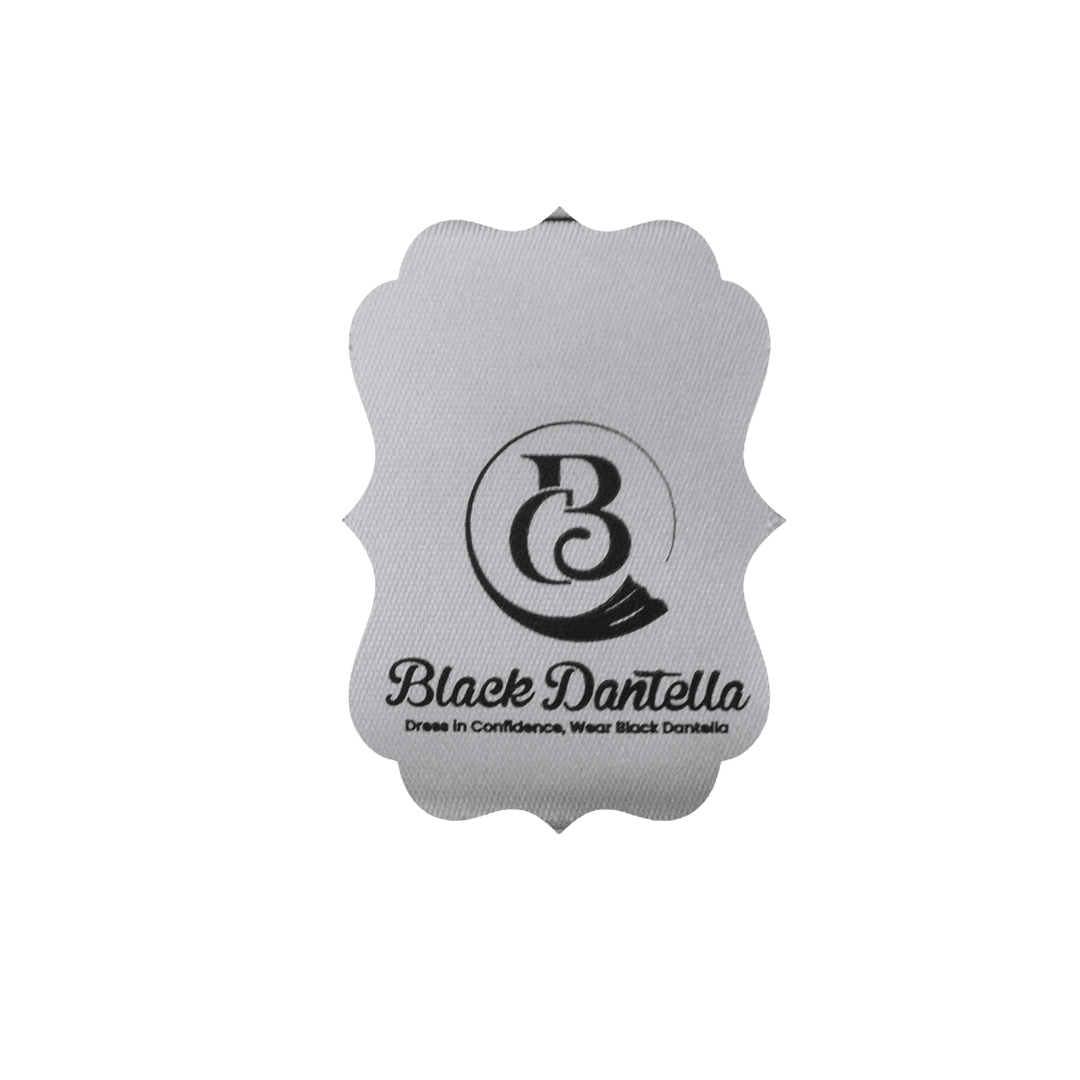
Manhattan Fold
The top and bottom edges are both folded under, giving a clean, finished look on all sides. The label is sewn flat onto the garment. Best for: high-end neck and hem labels where a refined finish matters.
Why brands choose it: It combines the easy seam attachment of a center fold with a flatter, more tailored appearance. It is a popular choice for high-end and designer labels.
Watch out for: The Manhattan fold costs slightly more than a standard fold because the folding is more complex. For large basic orders, a center fold may do the same job for less.
Typical Woven Label Sizes
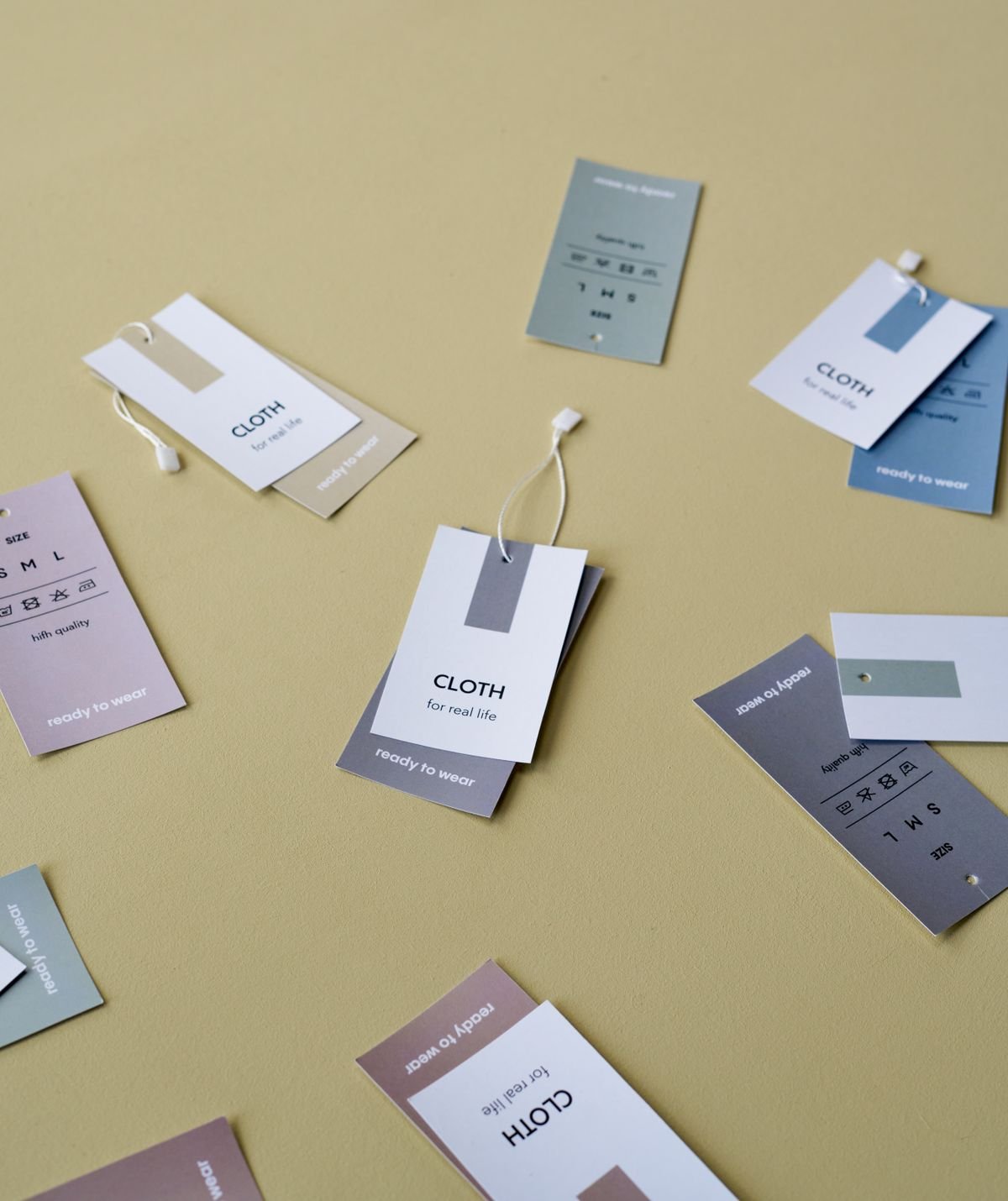
Size always refers to the finished (folded) dimensions unless stated otherwise. As a general guide: neck labels commonly run about 50 mm wide and 12–20 mm tall; side-seam and care labels are often narrower, around 30–40 mm wide; small hem or sleeve labels may be as compact as 25–30 mm wide. These are starting points, not rules — the right size depends on how much text the label carries and the scale of the garment. Children’s clothing usually takes smaller labels than adult outerwear.
Matching the Fold and Size to Your Garment
- T-shirts and polos: center-fold neck label, around 50 mm wide — soft, standard, and comfortable.
- Jeans and denim jackets: small end-fold hem label, sturdy enough to match the fabric.
- Hoodies and sweatshirts: center fold or miter fold at the neck, depending on how premium you want it to feel.
- Baby and children’s wear: small labels with soft folds — comfort comes first, so soft printed care labels are often the better choice (see woven label vs printed label for the full comparison).
- Caps and beanies: these often use embroidered patches rather than woven labels.
How to Choose the Right Fold
Ask yourself three questions:
- Where does the label go? Neckline and side seams suit end fold or center fold. Flat outer positions suit straight cut.
- What must the label show? A brand name alone suits any fold. Brand plus size or care information suits a center fold, where both faces can be used.
- What is the garment’s price level? Premium garments deserve the neater finish of an end fold or Manhattan fold. Everyday garments are well served by a center fold or straight cut.
If you are still unsure, describe the garment and where the label will sit when you start your design — a label specialist can recommend the fold that fits.
Common Mistakes to Avoid
- Choosing a fold without checking it against the actual garment and seam.
- Ordering a center fold label for a position where it will rub against the skin.
- Forgetting that the fold affects the label’s finished size — the folded size, not the flat size, is what the customer sees.
- Changing the fold after artwork approval, which means starting production over.
Frequently Asked Questions
What is the most common fold for neck labels?
The center fold is the most common for neck labels — it forms a loop sewn into the neckline seam and suits t-shirts, polos, and most casual wear.
What size should a woven neck label be?
A common finished size is around 50 mm wide and 12–20 mm tall, but the right size depends on your design and garment. Always confirm the finished (folded) size with your manufacturer.
What is the difference between a center fold and an end fold?
A center fold is folded in the middle to form a loop sewn into a seam; an end fold has its left and right edges folded under and is sewn flat onto the garment’s surface like a badge.
Which fold is best for care labels?
Straight-cut or center-fold labels are the most common for care labels — simple, economical, and usually sewn into the side seam where they stay out of the way.
Does the fold type affect the cost of woven labels?
In general, slightly. More complex folds need extra fabric and handling, so they can cost a little more than a simple straight cut — though the difference is usually small compared to the overall order.
Order Labels in the Right Size and Fold
Tell Label Hub in Faisalabad, Pakistan your garment type, placement, and design, and we will recommend the right fold and finished size — then manufacture your woven labels exactly to spec. Share your requirements through our start your design page or contact us. You can also explore our full range of custom clothing labels in Pakistan.
Prefer email or a form? Contact us and we will get back to you.
Ready to order? Browse our woven labels or start your design.





[…] uniforms, and premium casual wear — garments with a long life. Once you have chosen woven, our woven label sizes and folds guide will help you pick the right fold and finished size for your […]